
Gisela Perry · 28 October 2026
Examining Concealed Interaction Patterns to Refine Capacity Management in Scalable Online Systems
Concealed interaction patterns represent sequences of user actions that do not appear directly in standard logs yet influence overall system load through indirect pathways such as background API calls, cached session refreshes, and chained microservice requests. Researchers track these patterns by combining telemetry from multiple layers including network traffic, database query logs, and application performance monitors, and studies show that identifying them allows operators to adjust resource allocation before demand spikes occur. Data from large-scale platforms indicates that up to thirty percent of peak load originates from these hidden sequences rather than visible user clicks or page views.
Mapping Indirect User Behaviors
Analysts begin by collecting time-stamped events across distributed services while applying graph-based models that connect seemingly unrelated actions into single interaction chains. One study released by the National Institute of Standards and Technology in 2025 documented how session tokens refreshed every ninety seconds created recurring load waves that standard monitoring tools overlooked. Engineers then overlay these graphs onto capacity dashboards so that predictive scaling triggers activate when a pattern reaches a defined threshold rather than waiting for CPU or memory alerts. Turns out the same models also reveal seasonal variations, for example increased background polling during holiday shopping periods that compound normal traffic growth.
Analytical Methods and Tooling
Statistical clustering combined with sequence mining extracts concealed patterns from high-volume event streams while machine learning classifiers label each cluster according to its resource impact. Observers note that platforms processing more than ten thousand events per second benefit most from sampling techniques that preserve temporal order yet reduce storage overhead. What's interesting is that data from October 2026 projections by the Commonwealth Scientific and Industrial Research Organisation suggest hybrid approaches using both edge and central processing will become standard as latency requirements tighten. Teams integrate these tools into existing orchestration frameworks such as Kubernetes so that horizontal pod autoscalers receive updated metrics derived from pattern recognition rather than raw utilization figures alone.
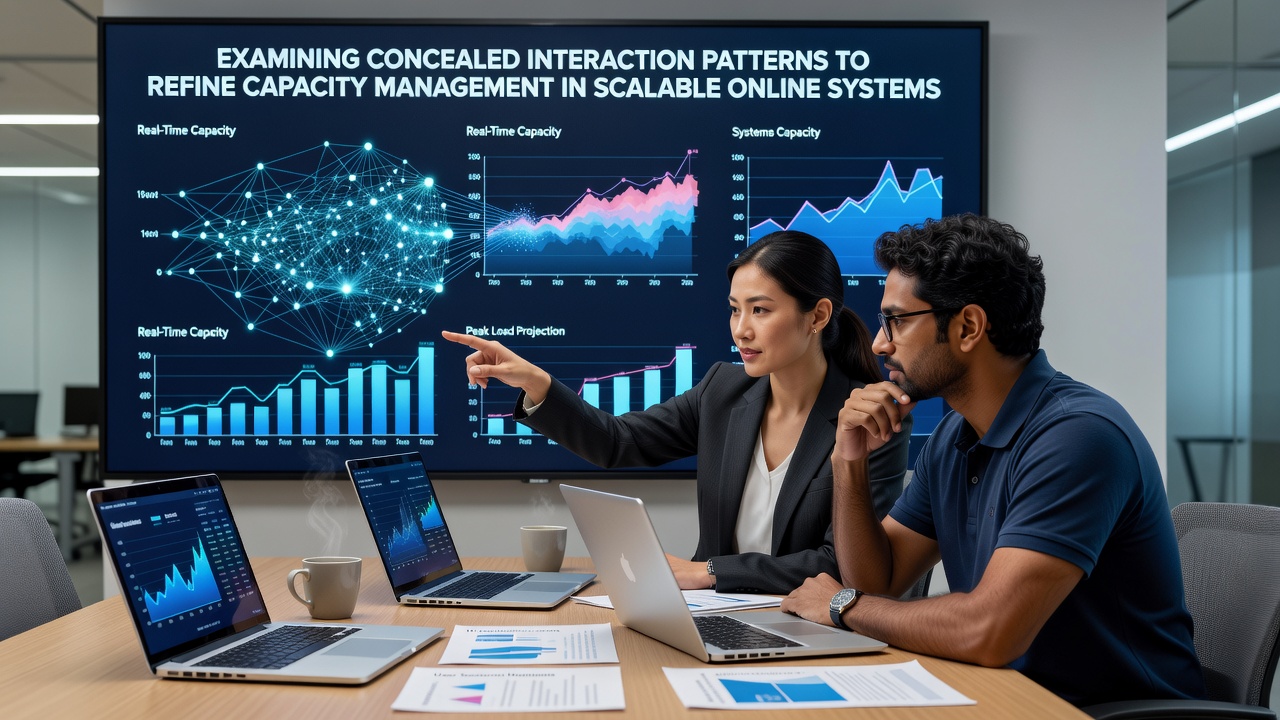
Implementation proceeds in phases beginning with baseline collection over several weeks followed by validation against historical incidents. Engineers test detection accuracy by replaying past outages and confirming that the system would have scaled earlier. Figures reveal that organizations completing this validation phase achieve between fifteen and twenty-five percent reductions in over-provisioned instances during steady-state operation.
Integration with Existing Infrastructure
Capacity management platforms already ingest metrics from load balancers and container orchestrators, yet adding pattern-derived signals requires careful schema alignment to avoid metric explosion. Operators map each detected pattern to a set of resource multipliers that reflect its observed footprint across CPU, memory, and network dimensions. Because patterns evolve with application updates, continuous retraining pipelines pull fresh data nightly and publish revised multipliers to the scaling controllers. Those who have deployed such loops report that rollback mechanisms remain essential when new user workflows introduce previously unseen sequences.
Case Examples from Production Environments
Take one financial services platform that experienced recurring database connection storms every weekday at market open. After mapping concealed authentication refresh patterns, the team adjusted connection pool sizing and introduced staggered token renewal windows that flattened the load curve. Another example involves a media streaming service whose regional caches filled unevenly due to background metadata prefetching triggered by user recommendations. Pattern analysis allowed operators to shift prefetch timing into off-peak windows while maintaining recommendation freshness. In both cases the organizations relied on publicly available research frameworks rather than proprietary black-box solutions, which facilitated knowledge sharing across teams.
Outlook Through Late 2026
Current roadmaps indicate that by October 2026 most major cloud providers will expose pattern-level telemetry APIs directly from their managed services. This development follows earlier standardization efforts around distributed tracing and will let smaller teams apply the same techniques without building custom pipelines. Regulatory guidance on data minimization continues to shape how much detail platforms retain, pushing the field toward federated analysis that processes raw events locally and shares only aggregated pattern signatures. Evidence suggests these constraints will accelerate research into privacy-preserving sequence mining methods that maintain detection fidelity while limiting exposure of individual user traces.
Conclusion
Concealed interaction patterns exert measurable influence on capacity requirements in scalable online systems, and systematic examination of those patterns supplies operators with earlier and more precise signals for resource adjustment. Production deployments demonstrate measurable efficiency gains once validation and integration phases complete. Continued evolution of tooling through 2026 alongside regulatory and infrastructure changes will determine how widely these methods spread across different sectors and organization sizes.